
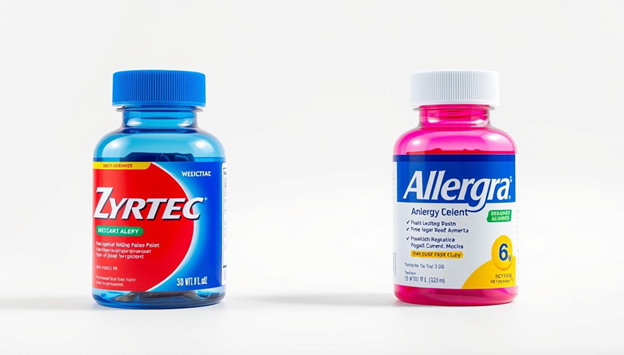
Which is the Best? Zyrtec vs Allegra: Best Antihistamine for Allergies
When seasonal allergies strike, finding the right relief can feel overwhelming. Two popular over-the-counter options stand out for tackling symptoms like sneezing and a runny nose.
These medications work by blocking histamine in your body. This action helps prevent those annoying signs of allergic rhinitis. Both come in easy-to-find forms at your local pharmacy.
However, they are not identical. Their effects and potential side effects differ. One may cause more drowsiness, while the other has fewer sedating properties.
Understanding these differences helps you make a smart choice for your treatment. Always talk to your healthcare provider for advice tailored to your needs.
Key Takeaways
- Both medications effectively relieve common allergy symptoms like sneezing and itchy eyes.
- They work by blocking histamine to prevent allergic reactions in your body.
- One option is more likely to cause drowsiness as a side effect.
- The other has fewer sedating effects but may interact with certain foods.
- Consult a healthcare professional before starting any new medication.
- Individual responses can vary, so personal experience matters.
- Over-the-counter versions are widely available for convenient access.
Understanding Your Allergy Medication Options
Finding the right over-the-counter relief can be a game-changer for your daily comfort. With so many choices, it helps to know how these treatments work in your body.
What Are Antihistamines and How Do They Work?
Your body releases histamine when it meets allergens like pollen or pet dander. This natural substance triggers those familiar symptoms you want to avoid.
Antihistamines are medications designed to block histamine. They stop it from binding to receptors in your system. This action helps prevent or reduce your allergic reaction.
Two common options are fexofenadine and cetirizine. Both belong to the second-generation group. These drugs are known for their effectiveness and safety profile.
Why Comparing These Two Medications Matters for Your Allergy Relief
Not all antihistamines work the same way for every person. Your choice can affect your day, depending on your needs.
One may begin working within hours and offer longer-lasting relief . The other is less likely to cause drowsiness, which is key if you need to stay alert.
It's also important to note potential interactions. For example, fruit juices can reduce how well one of these medications is absorbed. Timing your dose correctly matters for the best results.
Understanding these differences helps you pick what fits your lifestyle. Always discuss with your healthcare provider before starting any new treatment.
Symptoms Treated by Zyrtec and Allegra
When your body reacts to triggers like pollen or dust, you experience uncomfortable signs. These two popular options target the same core problems effectively.
Common Allergy Symptoms Both Medications Address
Both drugs work against several bothersome issues. They help with:
- A runny or stuffy nose
- Frequent sneezing
- Itchy, watery eyes
- Scratchy throat
- Skin reactions like hives
These problems stem from your system's response to allergens. Your body releases histamine, causing these classic signs.
How These Antihistamines Provide Relief
These medications block histamine from attaching to receptors. This action stops the allergic reaction in its tracks.
They work for seasonal issues like hay fever. They also help with year-round problems from dust or pets.
You might notice they ease cold symptoms too. But remember---they don't fight the virus itself.
Studies suggest one option might keep working longer. This could mean fewer doses for you throughout the day.
You typically feel better within one hour with one choice. The other might take up to three hours to kick in.
Always check with your healthcare provider about which fits your needs best.
Available Forms and Dosage Options
Choosing the right format makes your allergy treatment easier to manage. Both popular options come in multiple forms to fit your lifestyle.
Tablets, Liquids, and Dissolvable Forms
You can find these medications as standard tablets or quick-dissolve versions. Gel capsules and liquid syrups are also available.
Standard tablets work well for most adults. The dissolvable types are perfect when you need quick relief without water.
Liquid forms help children or those who struggle with pills. One brand offers chewable tablets that taste pleasant.
Remember that dissolvable tabs might not last as long. They're great for on-the-go use but may need more frequent dosing.
Age-Appropriate Formulations for Different Users
Both drugs are safe for people aged two and older. Dosage differences depend on your age group.
Adults typically take one tablet daily. The strength is 180mg for one option and 10mg for the other.
Children between 2-11 years need special dosing. One requires 30mg twice daily while the other uses 5mg once daily.
Always read product labels carefully. Many over-the-counter medications contain similar ingredients.
Taking your dose at the same time each day helps. This consistency provides better symptom control and fewer side effects.
Consult your healthcare provider before starting any new medication. They can recommend the best form and dosage for your needs.
Effectiveness and Speed of Action
Getting quick relief from your symptoms matters when allergies strike. How fast your treatment works can make a big difference in your day.
How Quickly Each Medication Starts Working
One option begins working within about one hour . This quick action helps when you need fast relief from sudden symptoms.
The other choice may take up to three hours to show its full effects . This difference in timing could affect your treatment plan.
Your personal response might vary based on your body and system . Some people feel better faster than others.
Duration of Relief: Which Lasts Longer?
Studies show that one medication provides longer-lasting coverage. A single dose often works all day for many users.
The other option might require more frequent dosing. This could mean taking it twice daily for full symptom control.
Both are effective for managing allergies , but duration differences exist. Your choice depends on your schedule and needs.
Consistent daily use helps maintain steady relief levels. Taking your medication at the same time each day works best.
Always consult your healthcare provider about which option fits your lifestyle. They can help you decide based on your specific situation.
Side Effects: Zyrtec vs Allegra
Understanding potential reactions helps you prepare for your allergy treatment journey. While both options are generally safe, your body may respond differently to each medication.
Common Side Effects You Might Experience
Most people tolerate these drugs well, but some temporary effects can occur. Both may cause:
- Mild stomach upset or diarrhea
- Occasional vomiting
One option brings additional possible reactions. These include:
- Headache or dizziness
- Dry mouth or cough
- Stomach pain or menstrual cramps
- Drowsiness for some users
These common side effects usually fade as your system adjusts. They're typically mild and manageable for most people.
Serious Side Effects to Watch For
Rare but serious reactions require immediate attention. Watch for:
- Hives, rash, or intense itching
- Trouble breathing or swallowing
- Swelling of face, lips, or tongue
- Hoarseness or throat tightness
These signs may indicate an allergic reaction to the medication itself. Seek medical help right away if they appear.
One key difference involves drowsiness risk. One medication is more likely to cause sleepiness than the other.
This matters if you drive or operate machinery. The other option is generally less sedating for daily activities.
Always consult your healthcare provider about persistent or bothersome effects. They can adjust your treatment plan if needed.
Drug Interactions and Important Warnings
Knowing how your allergy treatment works with other substances keeps you safe and effective. Some combinations can change how well your medication performs or increase certain risks.
Your body processes different drugs in unique ways. When they interact, it can affect your treatment outcomes. Always share your complete medication list with your healthcare provider.
Medications That May Interact with Your Allergy Drug
Certain prescription drugs can change how your allergy medication works. One option may interact with benzodiazepines, opioids, and anti-asthma drugs like theophylline.
These combinations could increase drowsiness risk or affect effectiveness. The other choice may interact with ketoconazole, erythromycin, and rifampin.
These interactions can reduce how well your allergy medication is absorbed. This might mean less relief from your symptoms.
Both options should not be mixed with alcohol. This combination can increase sleepiness, especially with one particular choice.
Special Considerations for Fruit Juices and Antacids
What you consume around your medication time matters greatly. Some everyday items can significantly impact your treatment.
Antacids containing aluminum or magnesium can reduce absorption of one medication. Take these a few hours apart from your allergy drug for best results.
Fruit juices like grapefruit, orange, or apple present another concern. They can decrease medication absorption by nearly half.
Wait at least four hours after juice before taking your medication. Alternatively, wait two hours after your dose before drinking juice.
Following these guidelines ensures your medication works properly. It helps you avoid decreased efficacy in managing your allergic rhinitis.
Always consult your healthcare provider about all medications and supplements. They can help you avoid potential interactions for optimal relief.
Special Considerations for Your Health
Your overall health plays a crucial role in choosing the right allergy treatment. Certain conditions require extra care when selecting medications.
Always share your complete medical history with your doctor. This helps them recommend the safest option for your situation.
Using Allergy Medications with Kidney or Liver Conditions
If you have kidney issues, both common options need careful consideration. Your doctor might adjust your dosage or suggest regular monitoring.
Liver conditions require special attention with certain treatments. One medication may need dosage changes if your liver isn't functioning optimally.
These precautions help prevent unwanted side effects. They ensure your treatment works effectively with your body's unique needs.
Pregnancy, Breastfeeding, and Allergy Medication Safety
During pregnancy, some options are generally preferred over others. Research shows certain choices have better safety profiles for expecting mothers.
While studies are limited, some medications are considered safer during this special time. Always discuss your options with your healthcare provider.
For breastfeeding mothers, similar considerations apply. Some treatments pass into breast milk less than others.
Your doctor can help weigh the benefits against any potential risks. They'll consider what's best for both you and your baby.
Key points to remember:
- Discuss kidney or liver conditions with your doctor before starting any new medication
- Dosage adjustments may be necessary for certain health situations
- Some options are preferred during pregnancy and breastfeeding
- Always seek professional guidance for personalized advice
- Self-medicating without medical consultation can be risky
These considerations help ensure your allergy relief is both effective and safe. Your healthcare provider can guide you toward the best choice for your specific health needs.
Drowsiness Factor: Which Is More Likely to Make You Sleepy?
How alert you feel during the day matters when managing your allergy symptoms. The sedating effects of some treatments can impact your daily activities and overall comfort.
Understanding these differences helps you choose wisely. One option tends to cause more sleepiness than the other for many users.
Why Cetirizine Is More Likely to Cause Drowsiness
This medication can cross the blood-brain barrier. It interacts with histamine receptors in your brain that regulate wakefulness.
This action may lead to feelings of sleepiness. Some people experience this common side effect more strongly than others.
Older adults might notice more pronounced sedating effects. Taking more than the recommended dose can also increase this risk.
How Fexofenadine Stays Non-Sedating for Most Users
This treatment does not easily cross into your central nervous system. It minimizes effects on your brain's wakefulness centers.
Most people experience minimal drowsiness with this option. It's generally considered less likely to cause sleepiness.
Individual responses can still vary. Some users might feel slightly tired even with this non-sedating choice.
If you need to stay alert for driving or work, the non-sedating option might suit you better. Combining either medication with alcohol or other sedatives can increase drowsiness risks.
Always consult your healthcare provider about which choice fits your needs. They can help you find the right balance between relief and alertness.
Dosage Differences and Administration Guidelines
Getting your dosage right makes all the difference in managing your symptoms effectively. Following proper guidelines ensures you receive optimal relief while minimizing potential risks.
Standard Dosages for Adults and Children
Adults typically take one tablet daily for both common options. One medication uses 180mg while the other requires 10mg.
Children aged 2-11 need special consideration. One option uses 30mg twice daily while the other requires 5mg once daily.
These recommendations apply to over-the-counter versions. Your healthcare provider might suggest different dosages based on your specific needs.
Best Practices for Taking Your Allergy Medication
Always take your treatment with a full glass of water. This helps your body absorb the medication properly.
Consistency matters for best results. Take your dose at the same time each day to maintain steady relief levels.
One medication interacts with fruit juices. Wait at least four hours after juice before taking it, or two hours after your dose before drinking juice.
Children should use age-appropriate forms like liquids or chewables. Always follow package instructions or your doctor's advice precisely.
Never exceed recommended dosages. Many over-the-counter products contain similar ingredients, increasing overdose risk.
Consult your healthcare provider for personalized advice. This is especially important if you have health conditions or take other medications.
Conclusion: Choosing Your Best Antihistamine
Making the right choice between these two popular allergy treatments depends on your personal needs. Both provide effective relief from common symptoms like sneezing and a runny nose.
One option offers longer-lasting coverage but may cause more drowsiness. The other stays non-sedating for most users but requires careful timing with certain foods.
Your lifestyle, health conditions, and sensitivity to side effects matter. Always consult your healthcare provider before starting any new treatment.
They can help you find the perfect match for your allergy management journey. With the right information and professional guidance, you can enjoy better days ahead.
FAQ
Which medication is less likely to make me drowsy?
Allegra (fexofenadine) is generally considered non-drowsy for most people. Zyrtec (cetirizine) is more likely to cause drowsiness, though many users still tolerate it well without feeling sleepy.
How quickly do these medications start working?
Both begin to relieve your allergy symptoms within about an hour. You can typically expect Allegra to start working in one hour, while Zyrtec may begin to provide relief in as little as 20 to 60 minutes.
Can I take these if I have kidney problems?
If you have kidney issues, you should talk to your doctor before taking either medication. Zyrtec requires dosage adjustment for reduced kidney function, while Allegra may also need to be used with caution.
Are there any foods or drinks I should avoid?
Yes, with Allegra, you should avoid taking it with fruit juices like apple, orange, or grapefruit juice, as they can reduce its effectiveness. It's best to take it with water. There are no such specific restrictions with Zyrtec.
Which one is better for treating hives?
Both are approved to treat chronic hives and can be effective. Some studies suggest Zyrtec may provide slightly more potent relief for skin-related allergy symptoms, but many people find both work well.
Can children take these allergy medications?
Yes, both are available in children's formulations. Allegra is approved for kids as young as 2 years old, and Zyrtec can be used for children 2 years and older. Always follow the specific age and weight guidelines on the package or from your pediatrician.