
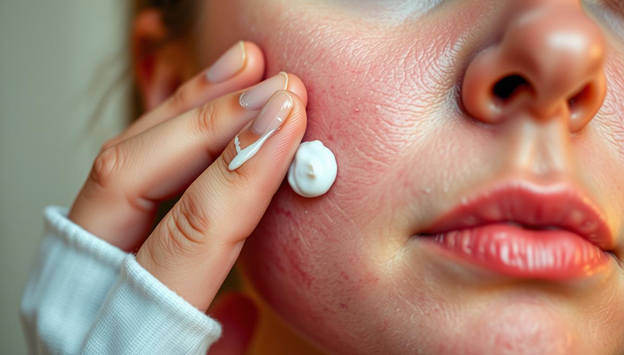
Does Tretinoin Help with Rosacea? Effective Treatment
Rosacea is a common skin condition affecting millions of Americans, often causing redness, bumps, and discomfort. Managing it requires careful skincare routines and, in some cases, prescription treatments. One such treatment that has gained attention is tretinoin, a retinoid derived from vitamin A. Known for its anti-aging and acne-fighting properties, tretinoin is often explored for its potential benefits in rosacea-prone skin.
This article dives into the role of tretinoin in rosacea management. It examines both the potential advantages and drawbacks, drawing insights from dermatologists like Dr. Bailey and clinical studies^2^. Understanding how to incorporate retinoids into a skincare routine is crucial, especially for those with sensitive skin. Proper use can help reduce symptoms, but misuse may lead to irritation or flare-ups^3^.
For individuals with rosacea, personalized skincare is key. The article will explore symptoms, treatment options, and how to build a routine that works. Whether you're new to tretinoin or considering it as part of your regimen, this guide offers practical advice to help you make informed decisions.
Key Takeaways
- Tretinoin is a retinoid often used for anti-aging and acne, but its role in rosacea is debated.
- Expert insights from dermatologists and clinical studies inform its potential benefits and risks.
- Proper skincare routines are essential for managing rosacea symptoms effectively.
- Introducing retinoids slowly can minimize irritation and improve tolerance.
- Personalized treatment plans are crucial for addressing individual skin needs.
Understanding Rosacea and Its Impact on Skin
Living with rosacea can be a daily challenge, as it often brings persistent redness and sensitivity to the skin. This chronic condition affects millions globally, with approximately 5% of people experiencing its symptoms^4^. Rosacea primarily targets the face, causing visible blood vessels, acne-like breakouts, and a flushed appearance. These symptoms can fluctuate, making it difficult to predict and manage flare-ups.
Identifying Symptoms and Triggers
Rosacea manifests in various ways, but the most common symptoms include persistent redness, visible blood vessels, and acne-like pustules. Many individuals also experience a burning or stinging sensation, especially when exposed to triggers like hot or cold temperatures, spicy foods, or alcohol^4^. These triggers can worsen inflammation, leading to more pronounced symptoms.
Dr. Bailey, a renowned dermatologist, emphasizes the importance of identifying personal triggers. "Understanding what exacerbates your condition is the first step toward effective management," she explains. Keeping a symptom diary can help pinpoint specific factors that lead to flare-ups.
Challenges in Managing Sensitive Skin
Rosacea-prone skin is highly reactive, making it challenging to find suitable skincare products. Many cosmetics and treatments contain ingredients like alcohol or fragrances that can irritate the skin further^5^. This sensitivity often requires a tailored approach to skincare, focusing on gentle, pH-balanced cleansers and sunscreens with at least SPF 30^4^.
Additionally, underlying inflammation plays a significant role in rosacea. Managing this inflammation requires a combination of lifestyle changes and medical treatments. For example, avoiding known triggers and using topical treatments like azelaic acid or ivermectin can help reduce symptoms^4^.
|-----------------------------|--------------------------|------------------------------| | Common Rosacea Symptoms | Typical Triggers | Management Tips | | Persistent redness | Hot or cold temperatures | Use gentle cleansers | | Visible blood vessels | Spicy foods | Avoid alcohol-based products | | Acne-like breakouts | Sun exposure | Apply sunscreen daily |
Managing rosacea requires patience and accurate information. Consulting a dermatologist can provide personalized recommendations, ensuring the best possible care for your skin. By understanding the condition and its triggers, individuals can take proactive steps to minimize symptoms and improve their quality of life.
Exploring Tretinoin: Properties and Benefits
Tretinoin, a powerful retinoid, has become a go-to treatment for various skin concerns. Its ability to address acne, reduce fine lines, and improve skin texture makes it a versatile option. Derived from vitamin A, this prescription retinoid works at a cellular level to promote healthier skin^6^.
How Tretinoin Works for Anti-Aging and Acne
Tretinoin increases cell turnover, shedding dead skin cells and encouraging the growth of new ones. This process helps reduce acne lesions and fade dark spots^6^. It also stimulates collagen production, which improves skin elasticity and reduces the appearance of wrinkles^7^.
Clinical studies show that consistent use can lead to smoother, more even-toned skin. However, some users may experience initial dryness or irritation, which typically subsides with continued use^8^.
Prescription Options and Over-the-Counter Alternatives
Tretinoin is available in various concentrations, ranging from 0.01% to 0.1%. A doctor can prescribe the strength best suited for individual skin needs^6^. Over-the-counter retinol products are milder but require conversion to retinoic acid, making them less potent^8^.
For those seeking faster results, prescription retinoids like tazarotene or trifarotene may be recommended. These alternatives are designed to minimize irritation while delivering effective results^6^.
|-----------------------|---------------|------------------------------| | Feature | Tretinoin | Over-the-Counter Retinol | | Potency | High | Low | | Results Timeline | 4-6 weeks | 8-12 weeks | | Prescription Required | Yes | No |
Doctors often recommend starting with a lower concentration and gradually increasing usage to build tolerance. This approach minimizes side effects while maximizing the benefits of this potent retinoid^7^.
Does Tretinoin Help with Rosacea
For those with rosacea, finding effective skincare solutions can be a delicate balance. Tretinoin, a retinoid known for its anti-aging and acne-fighting properties, is often explored for its potential in managing this condition. However, its use requires careful consideration due to the sensitive nature of rosacea-prone skin.
Potential Benefits for Rosacea Symptoms
Clinical studies suggest that tretinoin may help reduce acne-like breakouts associated with rosacea. It promotes cell turnover, which can improve skin texture and reduce the appearance of blemishes^9^. Some dermatologists note that it may also enhance collagen production, leading to firmer, more even-toned skin^10^.
However, experts emphasize that these benefits are not universal. "Each patient's skin is unique, and treatment approaches must be customized based on individual tolerance," says Dr. Cynthia Bailey^9^. For some, tretinoin can be a valuable addition to their skincare routine, but for others, it may cause more harm than good.
Understanding the Possible Side Effects
While tretinoin offers potential benefits, it also carries risks. Common side effects include dryness, redness, and scaling, which can exacerbate rosacea symptoms^10^. In sensitive skin, it may lead to intense flare-ups or increased inflammation^9^.
Less common but more severe reactions, such as hyperpigmentation or eczema, have also been reported^10^. For this reason, dermatologists often advise starting with a low concentration and gradually increasing usage to minimize irritation^9^.
"During a rosacea flare-up, it's best to discontinue tretinoin until the skin calms down," recommends Dr. Bailey^9^.
Ultimately, the decision to use tretinoin should be made in consultation with a dermatologist. They can assess your skin's condition and recommend a personalized treatment plan. Monitoring your skin's response closely is key to achieving the best results.
Integrating Tretinoin into a Rosacea-Friendly Skincare Routine
Building a skincare routine for rosacea requires patience and precision. The key is to prepare the skin properly and introduce active ingredients like retinoids gradually. This approach minimizes irritation and maximizes benefits^11^.
Steps to Prepare and Calm Your Skin
Before adding retinoids to your routine , it's essential to calm the skin. Start with a gentle cleanser that removes impurities without stripping natural oils. Avoid products with alcohol or fragrances, as they can trigger flare-ups^12^.
Follow cleansing with a soothing moisturizer to hydrate and strengthen the skin barrier. Ingredients like ceramides and hyaluronic acid are excellent options for rosacea-prone skin. This step ensures the skin is ready for active treatments^11^.
Dr. Bailey recommends, "Always test new products on a small area first. This helps assess tolerance and prevents widespread irritation."^11^
Layering Products Effectively
When incorporating retinoids, layering is crucial. Apply a pea-sized amount of cream after moisturizing to reduce irritation. This technique, known as buffering, helps the skin adapt to the active ingredient^11^.
Finish with a broad-spectrum sunscreen of at least SPF 30. Sun protection is vital for rosacea control , as UV exposure can worsen symptoms^12^.
Here's a simple guide to layering products:
|----------|--------------------------|-------------------------------------------| | Step | Product | Purpose | | 1 | Gentle Cleanser | Remove impurities without irritation | | 2 | Soothing Moisturizer | Hydrate and strengthen the skin barrier | | 3 | Retinoid Cream | Promote cell turnover and improve texture | | 4 | Broad-Spectrum Sunscreen | Protect against UV-triggered flare-ups |
Consistency is key. Start with retinoids 1-2 times per week and gradually increase frequency as your skin builds tolerance^11^.
Clinical Insights and Dermatologist Perspectives
Clinical insights reveal how ingredient selection can make or break a skincare routine. Dermatologists like Dr. Cynthia Bailey emphasize the importance of tailoring treatments to individual skin type and sensitivity. Case studies show that the right approach can improve skin health while minimizing side effects like dryness and irritation^13^.
Expert Recommendations and Case Studies
Studies highlight the effectiveness of certain ingredients in managing skin conditions. For example, metronidazole and azelaic acid are FDA-approved for reducing redness and inflammation^13^. Dr. Bailey notes, "Choosing gentle, high-quality ingredients is essential for maintaining skin barrier integrity."
Clinical evaluations also show that long-term use of retinoids can improve skin texture, but their impact varies based on individual tolerance^13^. Patients with sensitive skin often benefit from starting with lower concentrations and gradually increasing frequency^14^.
Balancing Efficacy with Skin Sensitivity
Balancing efficacy and sensitivity requires careful use of active ingredients . For instance, topical formulations with nanoparticles show promise in enhancing drug delivery without causing irritation^14^. This approach minimizes dryness while improving results.
Dr. Bailey advises, "Always monitor your skin's response and adjust your routine as needed. Consistency and patience are key to achieving long-term skin health."
"Personalized treatment plans are the cornerstone of effective skincare," says Dr. Bailey^13^.
By following expert recommendations and understanding their skin type, individuals can create routines that deliver results without compromising comfort. Clinical insights continue to guide the development of safer, more effective skincare solutions.
Alternative Treatments and Complementary Skincare Options
Exploring alternative treatments can offer relief for those struggling with persistent skin redness. While retinoids like tretinoin are popular, other products and approaches may better suit sensitive skin. This section compares different retinoids and highlights non-retinoid options to help manage symptoms effectively.
Comparing Retinol and Other Retinoids
Retinol, a milder retinoid, is often recommended for sensitive skin. Unlike tretinoin, it requires conversion to retinoic acid, making it less potent but gentler^15^. Clinical studies show that retinol can improve skin texture without causing severe irritation^16^.
Other retinoids, like adapalene gel, are also effective for unclogging pores and reducing inflammation^15^. However, their suitability varies based on individual tolerance. Dermatologists often suggest starting with lower concentrations to minimize the risk of flare -ups^16^.
Non-Retinoid Options for Managing Rosacea
For those seeking gentler alternatives, non-retinoid products like azelaic acid and niacinamide are excellent choices. Azelaic acid reduces redness and inflammation, making it a go-to for rosacea-prone skin^15^. Niacinamide strengthens the skin barrier, helping to prevent flare -ups^16^.
Other options include:
- Metronidazole : Reduces redness and acne-like breakouts^15^.
- Ivermectin Cream : Targets inflammation and improves skin texture^15^.
- Benzoyl Peroxide : Effective for papulopustular rosacea^15^.
Adjusting your skincare routine to include these products can help manage symptoms while maintaining skin health. Always consult a dermatologist to tailor treatments to your specific needs.
Conclusion
Managing skin redness and sensitivity requires a thoughtful approach, especially when exploring retinoids. Clinical studies highlight the importance of personalized skincare routines tailored to individual needs^17^. While retinoids can improve skin texture by promoting cell turnover, they may not suit everyone due to potential irritation^18^.
Experts emphasize consulting a dermatologist before starting any treatment. This ensures a plan that balances efficacy with skin sensitivity. For some, alternative products like azelaic acid or niacinamide may offer gentler solutions^17^.
Ultimately, understanding your skin's unique needs is key. By combining professional advice with insights from studies, you can make informed decisions for healthier skin. Take the next step---explore more or consult a specialist to find the best approach for you.
FAQ
What are the common symptoms of rosacea?
Rosacea often causes redness, visible blood vessels, and small bumps on the face. Some people also experience dryness, irritation, or a burning sensation.
Can tretinoin worsen rosacea symptoms?
Tretinoin may irritate sensitive skin, especially during the initial use. It's important to start with a low concentration and consult a dermatologist to minimize flare-ups.
How does tretinoin benefit the skin?
Tretinoin promotes cell turnover, reduces acne, and improves skin texture. It's also known for its anti-aging properties, helping to smooth fine lines and wrinkles.
Are there non-prescription alternatives to tretinoin?
Yes, over-the-counter retinoids like retinol can be gentler options. However, they may take longer to show results compared to prescription-strength tretinoin.
How should I incorporate tretinoin into my skincare routine?
Start by applying a small amount to clean, dry skin a few times a week. Gradually increase frequency and always follow up with a moisturizer and sunscreen to protect your skin.
What are the side effects of using tretinoin for rosacea?
Common side effects include dryness, peeling, and irritation. If these persist or worsen, it's best to consult a dermatologist for guidance.
Are there other treatments for rosacea besides tretinoin?
Yes, options like azelaic acid, sulfur-based products, and laser therapy can help manage rosacea. Non-retinoid skincare products with soothing ingredients are also effective.
Should I consult a dermatologist before using tretinoin?
Absolutely. A dermatologist can assess your skin condition, recommend the right product, and provide tips to minimize irritation while using tretinoin.